Drawing completeness & revisions
Whether the drawing set is internally consistent and current — matching revisions, defined datums, callouts and notes — so the build works to one controlled version rather than a mix.
Design Review & Manufacturability
A manufacturability review of your drawings and BOM before quoting — so gaps are found on paper, not on the line.
Request a quote
Send your drawing, BOM or idea — we reply with a practical Box Build scope review.
A DFM and drawing/BOM review reads your enclosure drawings, assembly drawings and bill of materials against how the unit is actually built. It answers a manufacturing question, not a design one: can this be assembled, connected, tested and serviced as drawn, with parts that are real and sourceable — and where is a specification missing or ambiguous. The gaps it finds on paper are the ones that would otherwise become rework, a wrong-part build, or a quote that stalls for a week of emails.
The boundary keeps the engagement honest: the design, its function and its fitness for purpose stay owned by you or your product specification. We raise manufacturability issues and options for your engineering team to decide, then build the approved design — we do not redesign the product or sign off its performance. New to the model? Start with what Box Build assembly is, and the principles behind this review in design for manufacturing a Box Build.
The review works across the drawing set and the BOM together, because a fit problem and a sourcing problem often hide in the gap between them.
Whether the drawing set is internally consistent and current — matching revisions, defined datums, callouts and notes — so the build works to one controlled version rather than a mix.
Whether every line is a real, sourceable part, where a constrained or non-stock item risks a long lead, and where an approved equivalent could remove a price premium or allocation risk.
Whether mounting points, clearances and stack-up tolerances let the parts assemble without a fight — the physical coordination behind enclosure integration.
Whether connector and terminal models, routing, strain relief and mating access are fully specified and buildable, so a harness is not blocked by a missing part number.
Whether the design leaves room to reach test points, connectors and serviceable parts — test access designed in, not discovered during functional test.
Whether label positions, unit identity, and the records and packaging the delivery requires are feasible on the drawn unit.
These map onto the build itself — enclosure integration, PCBA integration and cable harness integration — which is why reviewing them together, before quoting, catches the cross-interface issues a single-part check misses.
Most RFQs start with something missing. The review turns that into a short, structured clarification rather than a guess.
Instead of quoting around the unknowns or assuming the most expensive interpretation, we run an engineering-to-engineering clarification: a written technical checklist that pins down each missing item — connector and terminal models, relay part numbers, enclosure details, tolerances, finish, and test scope — and routes it to your engineering team to answer. Specifications are locked before sampling, so the quote and the first build work to the same confirmed requirement.
Representative project (anonymized to industry and region — no client name). An Australian earthmoving-equipment OEM requested quotes on several custom builds but sent incomplete drawings — missing relay models, Deutsch connector models and Hammond enclosure details — which would have made accurate quoting impossible and risked a wrong-part run on a 200-piece batch. A technical clarification checklist guided the customer's engineers to supply the missing specs, achieving full spec lock-down and enabling accurate quotes for 3 sample units and the 200-piece production run — before any material was committed. The lesson: the cheapest place to fix an incomplete drawing is a checklist, not a rework order.
The current drawing set with revisions, datums, tolerances and notes — mark anything provisional or still open.
The BOM with manufacturer part numbers, and a note on which lines allow approved alternates and which are fixed.
Connector and terminal models, wire list or harness drawing, labeling and any mating or routing constraints.
The functional, inspection and record requirements, so test and service access can be reviewed against the design.
First build quantity and any annual forecast, so sourcing and alternates are reviewed at the right volume.
Anything you already know is missing or undecided — flagging it up front is faster than us finding it.
The Box Build RFQ checklist is the full product-level input list, and how to prepare a Box Build RFQ package walks through assembling it. The review then feeds straight into NPI and pilot builds, where the locked-down scope is proven on the first controlled units.
It is a manufacturability review run before quoting: we read your enclosure and assembly drawings and BOM against how the unit is actually built — fit and clearance, connector and cable access, test and service access, and whether every part is buildable and sourceable — then flag the gaps and ambiguities that would otherwise surface as rework or a stalled quote. It is a review of manufacturability for assembly, not a redesign of your product.
No. The design, its function, and its fitness for purpose stay owned by you or your product specification. We review the drawings and BOM for how the unit assembles, tests and services, and we raise manufacturability issues and options — an equivalent connector, a tolerance that fights assembly, a missing relay model — for your engineering team to decide. We execute the approved design; we do not sign off its performance.
That is the normal starting point, not a blocker. We run an engineering-to-engineering clarification: a written technical checklist that pins down the missing items — connector and terminal models, relay part numbers, enclosure details, tolerances, finish and test scope — so specifications are locked before sampling. Locking these down up front is what prevents a wrong-part build and a re-quote later.
The manufacturability review is how we scope an RFQ accurately — we read the files, identify what is missing, and confirm the buildable scope before pricing, rather than padding a number to cover unknowns. Send what you have; the review locates the gaps, and the quote reflects the real, locked-down requirement.
The manufacturing resources behind these Box Builds operate under independently audited, currently valid management-system registrations. The certificates below are the genuine documents — shown in full for verification rather than as institution logos. Product-level compliance for a specific device remains defined and owned by the customer.
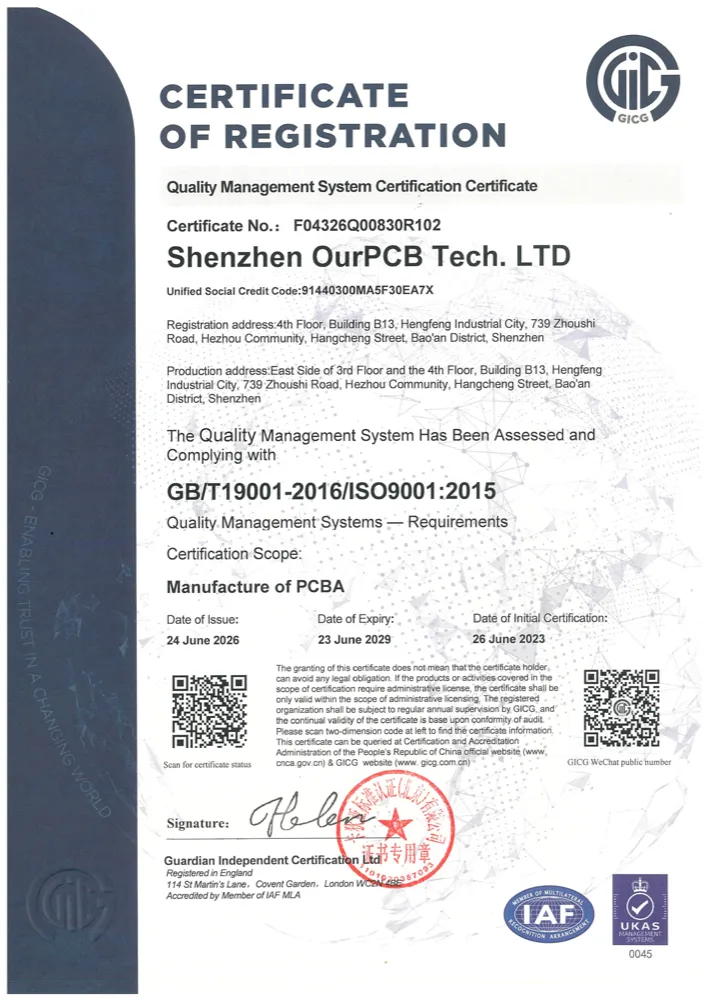
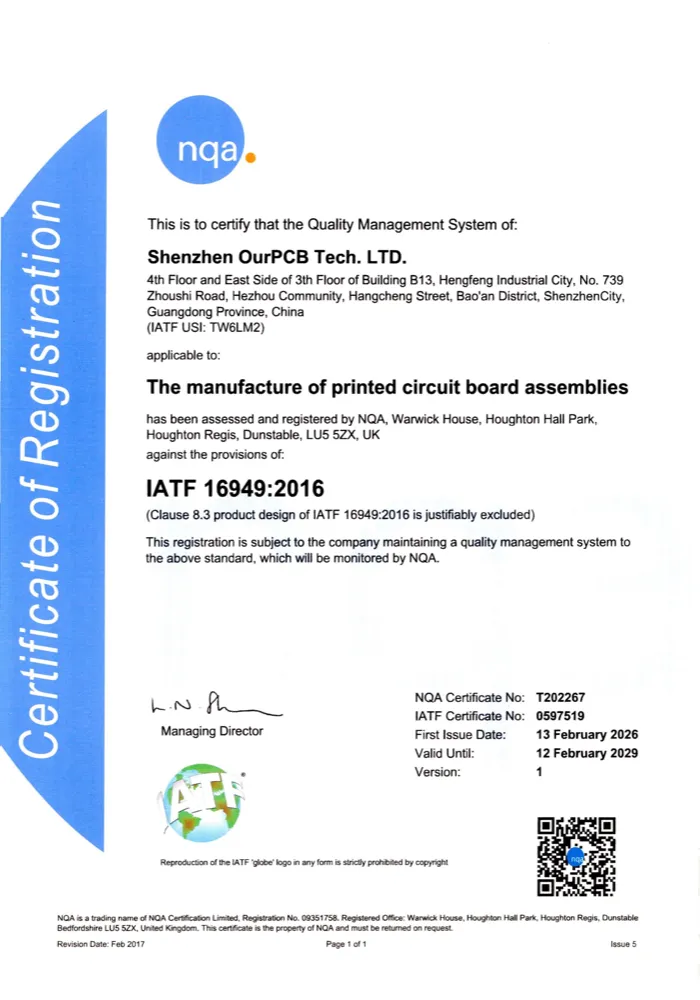
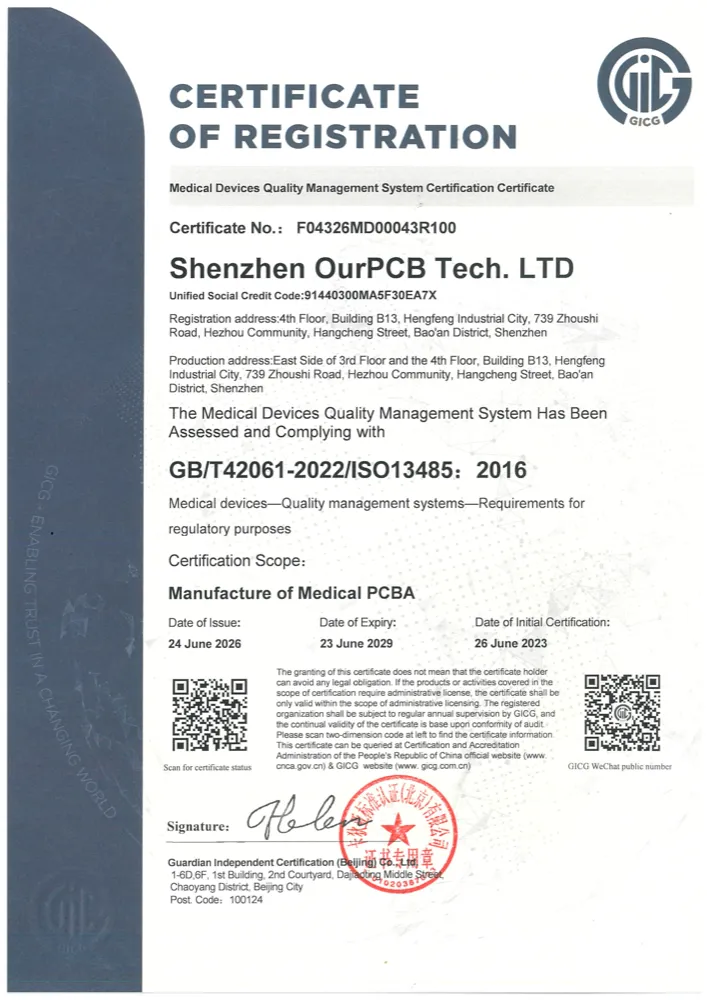
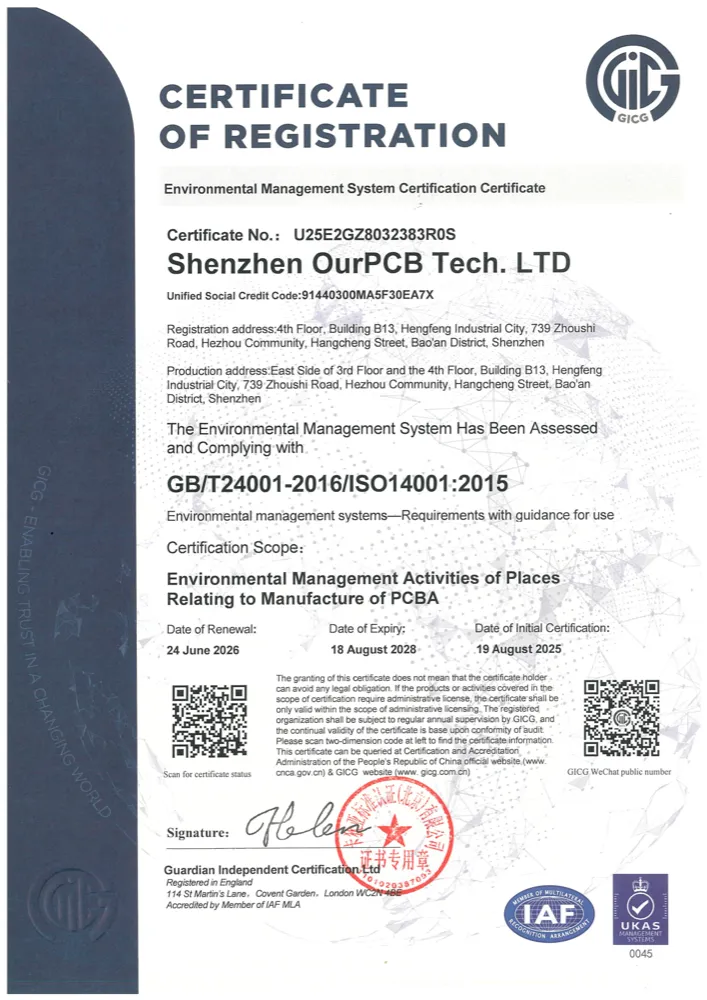
Certificates are issued to the operating manufacturing entity named on each document. Click any certificate to open the full-size scan.
Have a BOM, assembly drawings, enclosure CAD, harness requirements or test procedure? Send what you have. We’ll confirm the Box Build scope, identify missing information and outline the next step before quotation.

Send your drawing or idea and we’ll reply with a practical Box Build scope review.