Menu

What We Build

IoT Gateways Box Build Assembly

Combine approved electronics, antenna interfaces, firmware, connectivity checks and unit identity in one controlled build.

  • Board-to-enclosure integration
  • Controlled device configuration
  • Connectivity and identity records

Request a quote

Request a Box Build Scope Review

Send your drawing, BOM or idea — we reply with a practical Box Build scope review.

Need technical help instead? Contact support

What IoT Gateway Builds Usually Involve

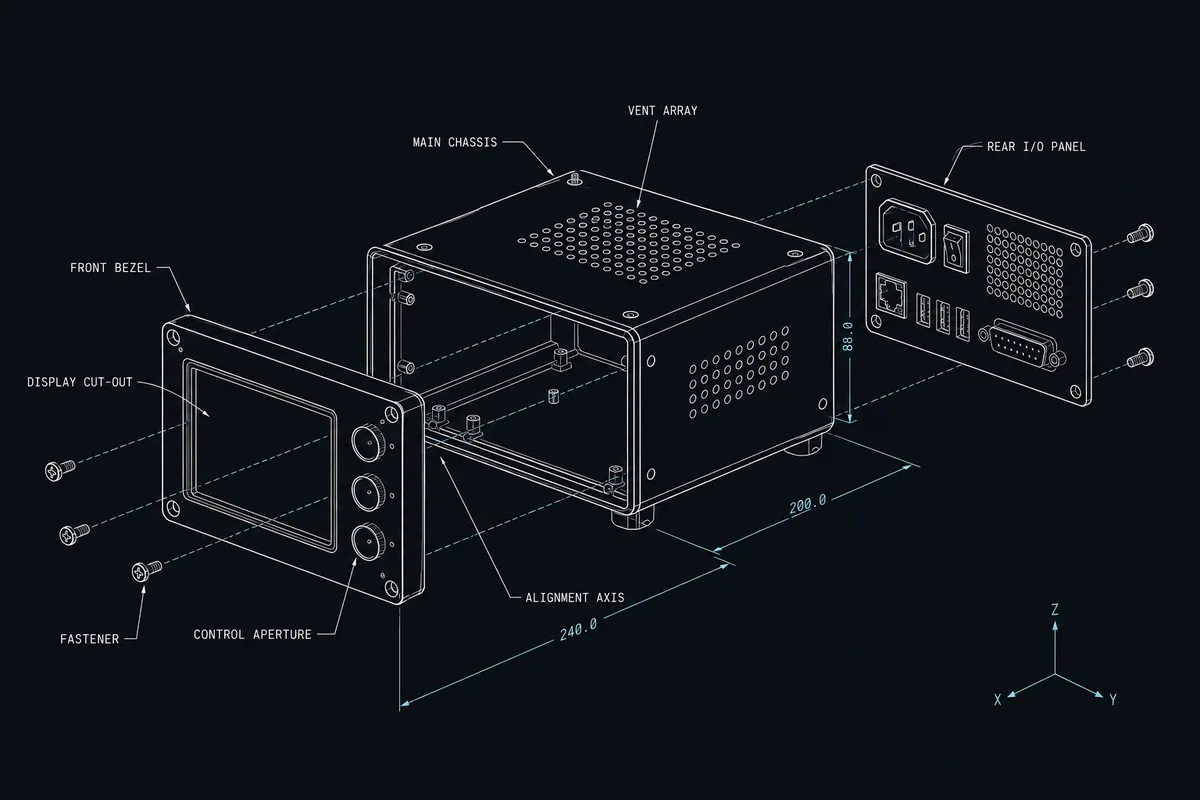
An IoT gateway Box Build can combine one or more approved PCBAs with a finished enclosure, power input, wired network ports, radio or antenna interfaces, status indicators, internal cables, storage or communication modules and accessories. Integration also commonly includes loading an approved firmware image, applying device-specific settings, assigning identity and checking the finished unit through a customer-approved procedure.

The scope begins with a defined product architecture. We do not assume that every gateway uses the same radio, protocol, provisioning flow or compliance route. The customer controls the design and acceptance requirements, while we integrate, test and deliver the unit according to the released package.

Exploded IoT gateway blueprint showing an enclosure, approved electronics and communication interfaces

Typical Integration Scope

Enclosure and external interfaces

The approved housing, panels, seals, thermal parts, mounts and hardware form the mechanical stack. Enclosure integration checks board and connector alignment, light-pipe or indicator presentation, antenna mounting, cable exits, grounding points and access for power, network, reset or service interfaces.

Approved boards and modules

We install approved PCBAs and communication, storage or power modules with the specified standoffs, fasteners, isolation and thermal interfaces. PCBA integration also coordinates connector access and the programming or test points needed after the enclosure begins to close.

Antenna and cable integration

Internal RF cables, antenna leads, power cables and data interconnects follow released routing and retention requirements. The build plan controls connector identity, mating, bend radius, strain, separation from heat or sharp edges and any shielding or grounding details specified by the customer.

Firmware, labels and pack-out

Approved firmware, bootloader or device configuration can be loaded through a controlled method. Product, MAC, network or serial identity is applied from approved data rules, then required accessories, power adapters, mounting parts, manuals and protective packaging are checked before release.

Engineering and Verification Considerations

Gateway integration connects mechanical, electrical, radio, software and data-identity decisions. A change in one area can affect the test method or delivered configuration, so revisions need to remain synchronized.

RF, thermal and installation context

Antenna type, position, cable route, enclosure material, heat paths, ventilation, installation orientation and nearby conductive features can influence product behavior. The customer owns the design targets and any required radio, EMC, safety or environmental certification. Assembly checks confirm only the defined physical configuration and workmanship criteria.

Provisioning and connectivity

The verification package should state how firmware versions, device identifiers, credentials or certificates are provided and protected, plus which wired or wireless functions are checked. Functional testing follows approved setup conditions, expected responses, limits, result fields and failure-handling rules.

A pilot build is useful for confirming programming access, antenna and cable installation, closure sequence, identity allocation, connectivity checks and data output. Any resulting change should enter the controlled files through the approved ECO or ECR process.

What to Include in the RFQ

Provide the best current definition even if some items are preliminary. Clear file status helps separate quotation assumptions from information required before build release.

Mechanical and material package

BOM, approved sources, enclosure data, assembly drawings, thermal materials, antenna parts, accessories, variants and supply responsibility.

Electrical and interface definition

Board and module revisions, connector map, cable or harness drawings, power requirements, grounding and external interface details.

Software and identity controls

Approved images, settings, programming method, credential handling, serial or network identity format, allocation rules and required records.

Test and delivery requirements

Connectivity procedure, fixtures, test limits, data format, compliance responsibility, labels, packaging, quantities, forecast and delivery condition.

Review the full RFQ checklist, explore firmware loading and configuration, or return to What We Build.

Ready to Review Your Box Build Scope?

Have a BOM, assembly drawings, enclosure CAD, harness requirements or test procedure? Send what you have. We’ll confirm the Box Build scope, identify missing information and outline the next step before quotation.