First Working Units, Controlled
Prototype Box Build Assembly
Build and verify the first complete units against released inputs, so the design, materials and assembly steps are proven before repeat production is committed.
- Design proven on real units
- Material and fit verified
- Findings fed back to documents
Request a quote
Request a Box Build Scope Review
Send your drawing, BOM or idea — we reply with a practical Box Build scope review.
When a Prototype Box Build Is the Right Step
A prototype build suits a product that is new or has changed enough that its complete assembly has not yet been proven on real hardware. It is the step where drawings, the BOM, the enclosure, the PCBA and any harness first come together as a working unit, so that buildability, fit, material availability and test access are confirmed before volume tooling and pricing are set. Fit is judged from design maturity and the questions that still need answering, not from a quantity — a first build can be a single unit or a small handful, sized to the learning it has to return.
What a Prototype Build Actually Proves
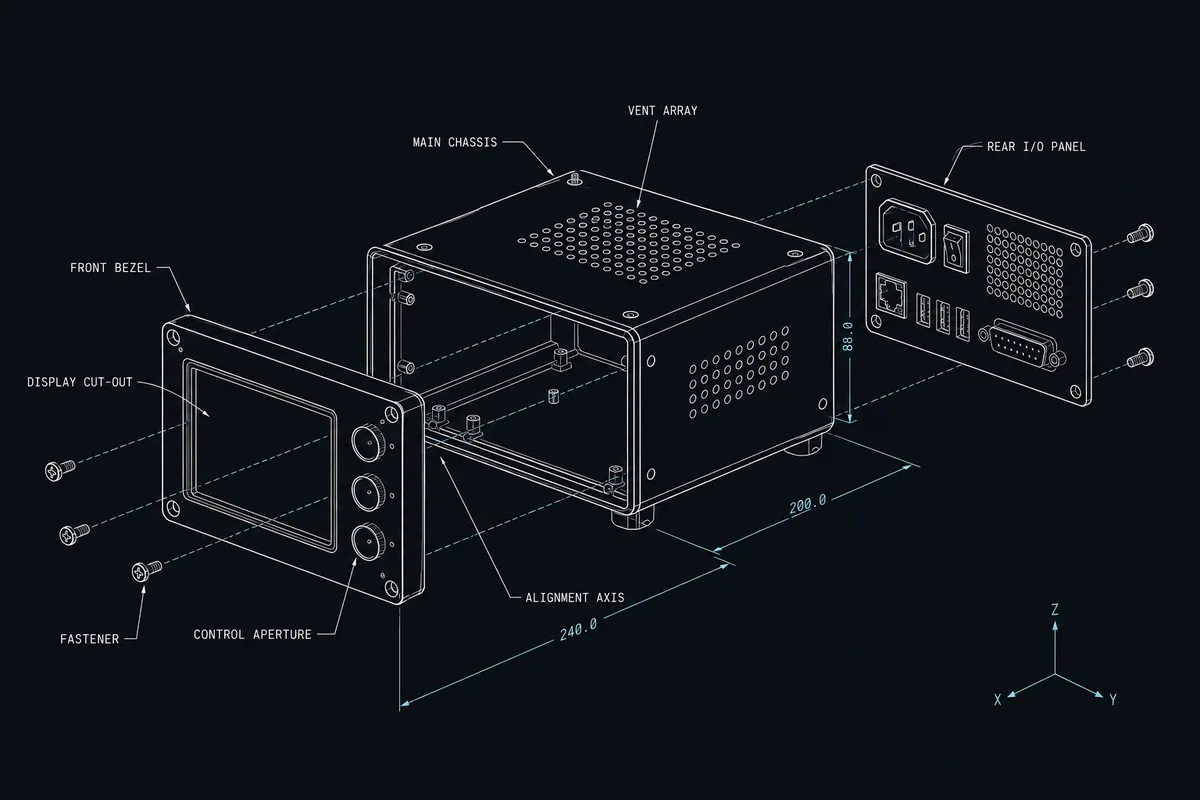
A prototype earns its cost by surfacing the issues that are cheap to fix now and expensive to fix at volume. Assembling the first unit tests whether the parts fit and the sequence works, whether the released BOM matches real, buyable components, whether test and inspection points are physically accessible, and whether the work instructions are complete enough for someone other than the designer to build from. Problems found here — an interference, a missing spec, a part that is on allocation — are returned to the drawings and BOM before they become a production line stoppage.
Prototype, NPI and Pilot — How They Differ
These terms overlap and are worth separating. A prototype build is the first physical complete unit that proves the design works as an assembly. NPI (new product introduction) is the wider process that plans and controls that transition — the checklist, approvals and documents around it, covered in our what is NPI guide. A pilot is a small controlled run that proves the process and fixtures once the design is settled. In practice a program often moves prototype → pilot → volume, and our NPI and pilot production page covers the readiness gates between them.
From Prototype to Repeatable Production
A prototype is only useful if its findings are captured. Interferences, spec gaps, sourcing risks and instruction fixes are returned to the controlled product and process documents, so the next build starts from a corrected baseline rather than repeating the same discovery. Once the design is proven and stable, the same product moves into low-volume, high-mix or high-volume production on a settled process instead of an unproven one.
Learning captured, not repeated
First-build findings update the drawings, BOM, work instructions and test plan together, so repeat production inherits a proven configuration.
What We Need to Quote a Prototype Build
Send the complete product files with whatever maturity they have: assembly and enclosure drawings, the BOM, PCBA and harness inputs, firmware or settings, the test intent, and the quantity you want built first. Open questions are expected at this stage — a prototype build is partly how they get answered — so a partial package with clear unknowns is enough to start a scope review.
Prepare the technical package
Include BOM, drawings, enclosure, PCBA and harness inputs, firmware, test intent, labels and supply responsibility.
Review the capability map
Check which integration, configuration, verification and final-delivery activities belong in scope.
Ready to Review Your Box Build Scope?
Have a BOM, assembly drawings, enclosure CAD, harness requirements or test procedure? Send what you have. We’ll confirm the Box Build scope, identify missing information and outline the next step before quotation.