Scope-review outputs
- Current BOM, drawing, software and test revisions
- Supply, integration, approval and exclusion matrix
- Finished-unit acceptance and handover requirements
- Missing inputs, risks and decisions needed next
Seven-Stage Box Build Workflow
We move each complete unit through an agreed scope, build-readiness controls, coordinated inputs, integration, verification and documented handover. The route is configured to the product rather than assumed from a generic production sequence.
Request a quote
Send your drawing, BOM or idea — we reply with a practical Box Build scope review.
Stage 01 / Define the build
We review the current BOM, assembly drawings, enclosure data, PCBA and harness interfaces, test inputs, build quantities, variants and required delivery condition. The output is a practical boundary for what we coordinate, integrate, verify, document and deliver.
Customer-supplied material, approved sources, exclusions, acceptance authority and open assumptions are recorded before quotation or material commitments are treated as firm.
Use the Box Build RFQ checklistStage 02 / Validate readiness
We plan how the first controlled units will establish build readiness. For a new design this often starts with a prototype box build to prove the assembly. The plan can cover material status, assembly order, work-instruction maturity, fixture and test readiness, first-unit inspection, known risks, stop conditions and customer approval points.
Pilot quantity and evidence are chosen for the learning and approval needs of the project. Findings are returned to the controlled product and process documents before high-volume production is released.
Review the NPI and pilot workflow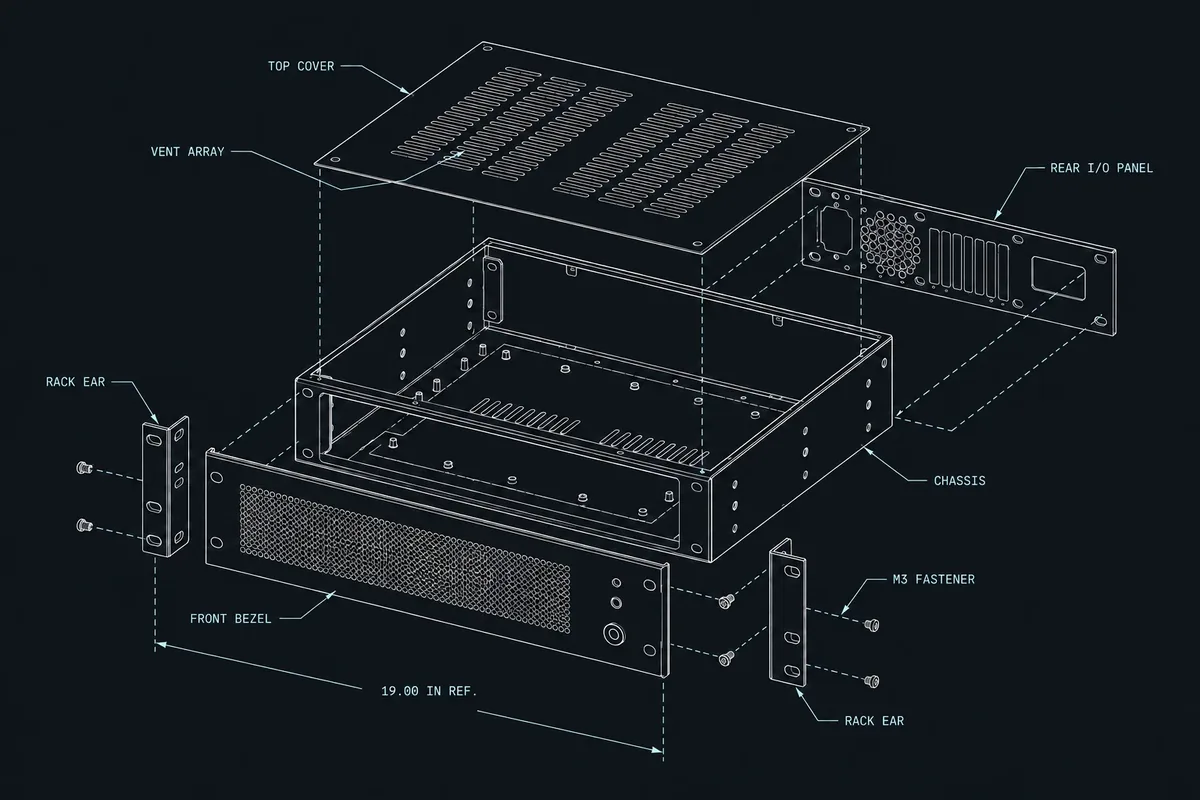
Stage 03 / Align every input
We coordinate the approved versions and readiness of enclosures, PCBAs, cable harnesses, COTS parts, fasteners, labels, accessories and packaging. Customer-supplied and coordinated items remain visible as separate responsibilities.
Before build release, we check identity, revision, quantity and status against the project plan and flag shortages, substitutions or unresolved discrepancies for disposition.
Stage 04 / Build the complete unit
We integrate the mechanical and electrical elements through the approved sequence: enclosure and hardware preparation, board and device mounting, cable routing and retention, connector mating, strain relief, grounding or thermal interfaces, and required closure steps.
Defined in-process checks confirm orientation, polarity, fastening, routing, clearance, connector access and visible workmanship at the points where later access may be limited.
Explore core integration capabilitiesStage 05 / Verify the agreed result
We perform only the checks defined for the product: visual and configuration inspection, power-up, I/O or functional steps, and approved firmware or parameter loading where included.
The customer-approved procedure identifies interfaces, test version, limits, pass/fail criteria, exception handling and the data that must be retained. A board-level check is not represented as finished-product validation.
Run defined finished-unit checks and record the agreed results and exceptions.
Load approved releases and settings with controlled version and unit identity.
Connect agreed checks, deviations and test data to the required unit or batch record.
Hold a nonconforming unit for the authorized review, rework or deviation decision.
Stage 06 / Complete the handover
We bring together the agreed serial list, inspection and functional-test records, firmware or configuration status, deviations, labels, accessories, manuals and packing list. The package reflects actual project records and the required delivery condition.
Units are labeled, checked and packaged to the approved specification before delivery. Documentation depth and data format are defined in the project scope rather than assumed for every build.
Stage 07 / Control exceptions
Missing files, shortages, failed checks, ECOs and deviation requests can interrupt the normal sequence. We identify the affected material, instructions, software, test steps and units, then hold or release work according to the authorized decision.
The effective point for an approved change is recorded so the build history remains understandable. Customer approval is required wherever the agreed responsibility matrix assigns product or acceptance authority to the customer.
Upload RFQ Package for Review or Ask a Technical Question about an open scope decision.
Send the product definition you have. We will review the Box Build scope, identify missing inputs and map the decisions required before quotation and release.

Send your drawing or idea and we’ll reply with a practical Box Build scope review.