Decision owners
Name who can approve drawings, substitutions, deviations, test criteria, samples and production release.
Controlled Product Introduction
Validate build readiness, assembly learning, testing and release evidence before repeat Box Build production.
Request a quote
Send your drawing, BOM or idea — we reply with a practical Box Build scope review.
NPI begins by checking whether the complete product definition can support a controlled build. We review the BOM and approved sources, assembly drawings, enclosure, PCBA and harness status, test and configuration inputs, labels, packaging and open engineering decisions. Missing information is made visible before material or schedule commitments are treated as firm.
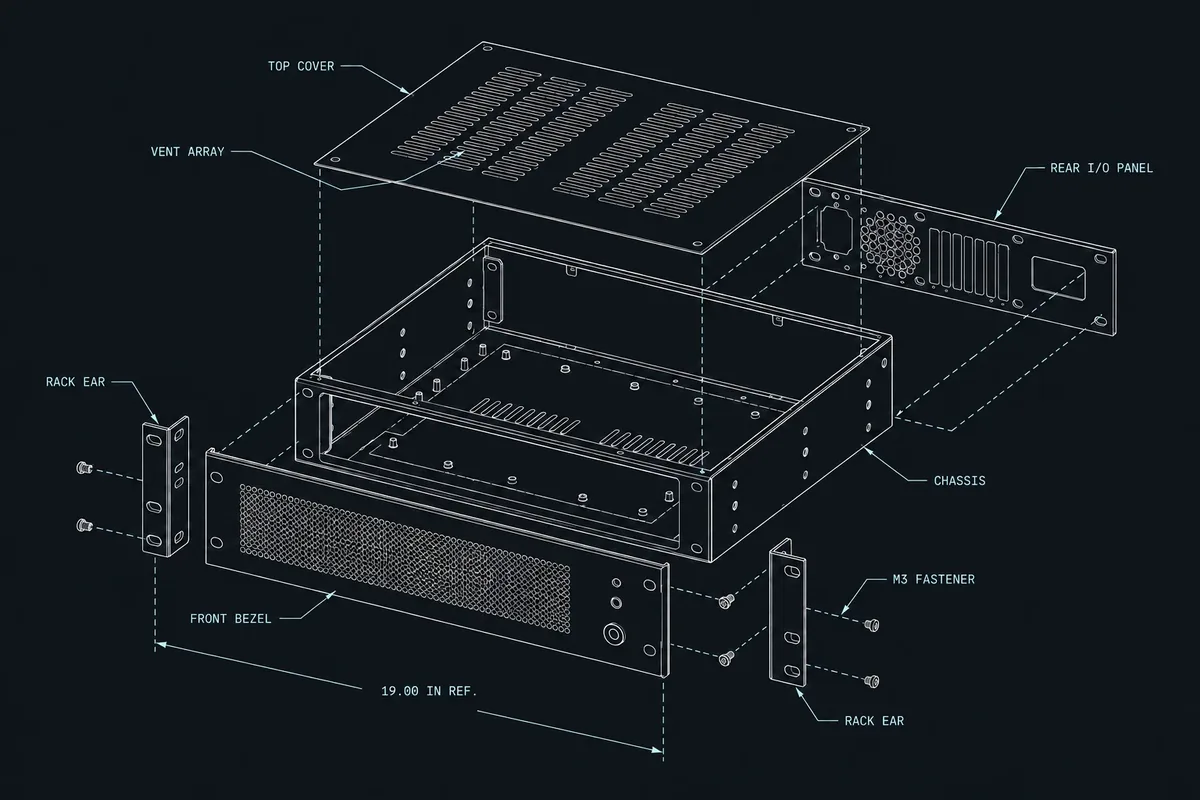
The responsibility matrix identifies customer-supplied and coordinated materials, tool and fixture ownership, software inputs, approvals and excluded work. A practical risk register focuses on unresolved interfaces, long-lead or constrained inputs, test readiness, configuration errors and decisions that can stop the pilot.
Name who can approve drawings, substitutions, deviations, test criteria, samples and production release.
Identify missing or failed inputs that prevent a unit from advancing without written disposition.
Pilot quantity is a project input chosen around learning and approval needs. The plan defines material status, build sequence, traveler, work-instruction maturity, fixtures, inspection points, customer witness or review needs and stop criteria. It does not impose a universal batch threshold.
The first controlled unit is used to observe fit, cable route, connector and tool access, assembly sequence and likely error points. Findings can become redlines, photographs, clarified acceptance criteria or engineering-change requests. Approved learning is returned to the work instruction so repeatability does not depend on memory.
The pilot confirms that the test procedure, limits, interfaces, fixture, approved firmware and configuration, unit record and failure workflow operate together. Results are evaluated against the agreed acceptance criteria. A successful loading step or power-up alone is not presented as full product validation.
See the detailed finished-unit testing workflow.
Pilot findings are summarized with affected drawings, BOM items, work instructions, software, test steps and open risks. Customer approval can release the current baseline, require changes or hold the program. Rework and sample acceptance are recorded according to the project plan rather than assumed from informal feedback.
The release baseline brings together approved BOM and sources, drawings, work instructions, test and configuration revisions, labels, packaging and quality records. It also identifies remaining risks and the effective point for any approved changes.
Use the released baseline and variant controls to manage subsequent low-volume, high-mix builds.
Share the product stage, current BOM and drawings, maturity of enclosure, PCBA and harness inputs, known risks, planned variants, build quantity and forecast, test and configuration status, labels, packaging and the customer approval plan. If the package is incomplete, identify the decisions the pilot is intended to answer. For a brand-new design, a prototype box build often comes first to prove the assembly before this pilot stage.
Use the Box Build RFQ checklist or review the full delivery process.
Have a BOM, assembly drawings, enclosure CAD, harness requirements or test procedure? Send what you have. We’ll confirm the Box Build scope, identify missing information and outline the next step before quotation.

Send your drawing or idea and we’ll reply with a practical Box Build scope review.