Route constraints
Entry points, edge protection, separation, moving clearances, thermal exposure and enclosure closing paths.
Internal Interconnect Integration
Install approved internal harnesses with controlled routes, retention, endpoint identity and complete-unit verification.
Request a quote
Send your drawing, BOM or idea — we reply with a practical Box Build scope review.
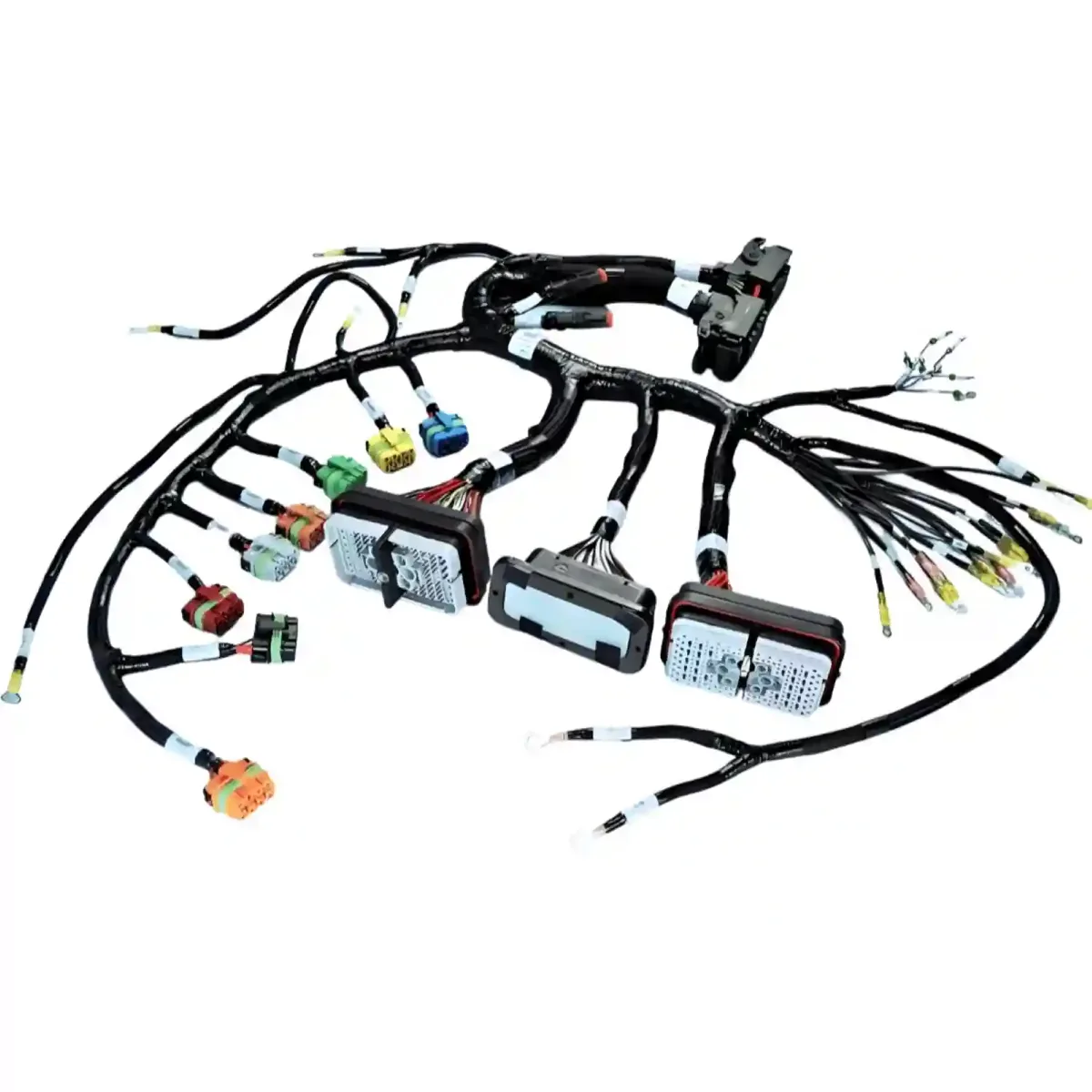
An approved harness becomes part of the Box Build only after its endpoints, route, retention and interaction with the enclosure and electronics are controlled. We install internal interconnects between PCBAs, power items, controls, displays, sensors and external interfaces according to the released product definition.
The scope starts with an identified harness input. It does not turn this page into a stand-alone cable production offer. The Box Build responsibility matrix defines who supplies each harness, which incoming information is required, what installation checks apply and how connection faults are handled.
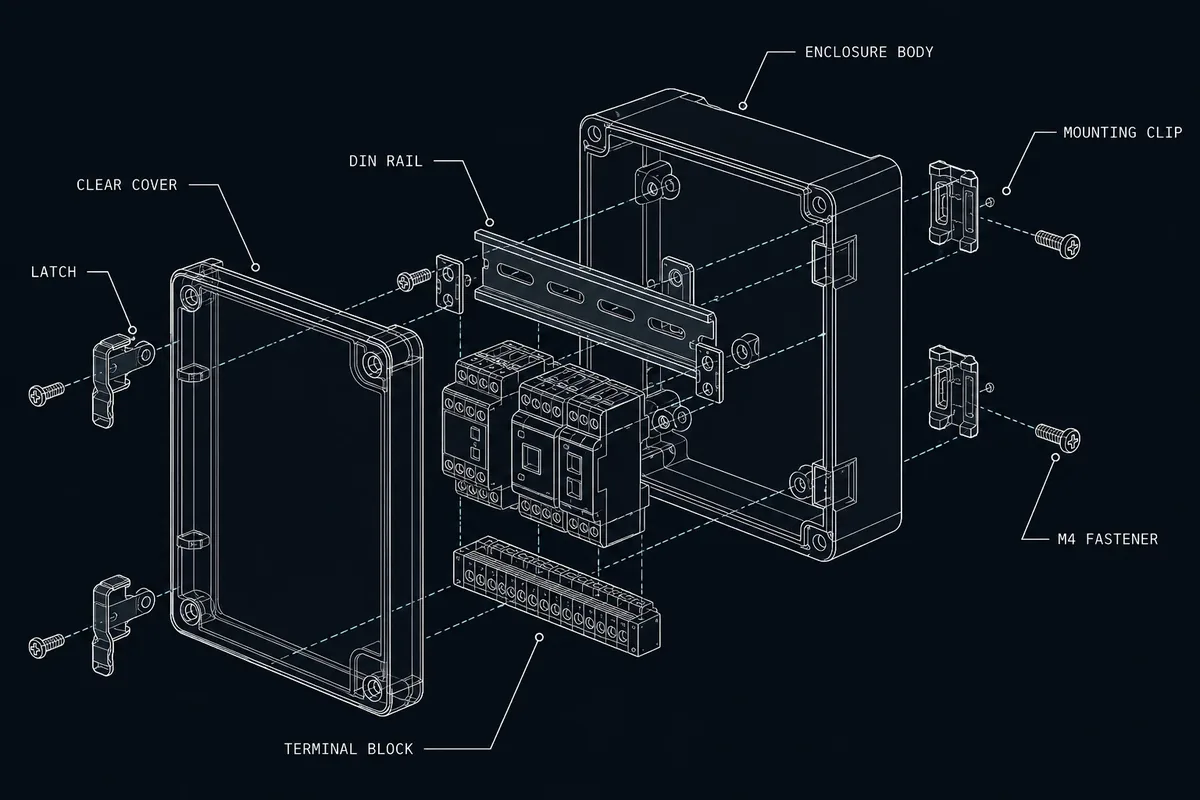
Routes are controlled by the drawing, harness definition and approved first-unit evidence. We check that cables follow the specified path, preserve the defined bend requirement, avoid sharp edges, hot surfaces and moving parts, and leave the access needed for assembly and service. Where a service loop is required, its location and usable allowance should be explicit.
Entry points, edge protection, separation, moving clearances, thermal exposure and enclosure closing paths.
Connector reach, mate and unmate access, removable panels, module replacement and test access.
Retention should keep handling and movement loads away from connector and termination interfaces without damaging the cable.
We install specified clips, ties, glands and clamps at defined locations and inspect their orientation and engagement. The work instruction can define tie type, acceptable tension method, trim direction, protective sleeving and clamp hardware where those details affect safety or repeatability.
Strain relief at an external cable entry is coordinated with the enclosure opening, seal or gland stack and internal route. Any sealing or pull-performance requirement needs its own approved acceptance method.
Endpoint identity and connector orientation are checked before power-up. Labels, color references, keying and polarity features support error prevention, but the build instruction must define the applicable method for each product and variant. Connectors also need enough access to seat, latch and inspect without pulling on the wire bundle.
Harness integration is reviewed together with enclosure interfaces and PCBA mounting. Cable entry holes, glands, protective edges, board connector direction, shield or grounding points, brackets and covers all affect the route and assembly sequence. The first controlled build is used to expose conflicts that drawings alone may not show.
When a change affects length, connector, label, clip location or adjacent hardware, the affected documents and effective units are identified before the revised route enters production.
Verification can include visual connection checks, endpoint confirmation, a defined connection or continuity method, and system functions that depend on the installed harness. The exact coverage, fixture or tool, limits, data fields and acceptance authority are agreed for the finished product.
If a fault is found, the unit is held according to the project workflow. Rework requires authorization, and the retest scope is recorded. This links installation evidence with the functional test and any unit-level records defined in quality planning.
Part number, revision, drawing or connection table, approved source and supply responsibility.
Connector references, pin or polarity information, mating components and access requirements.
Path, bend constraints, separation, service loops, movement, heat and sharp-edge avoidance.
Clip, tie, clamp, gland, sleeving, edge protection and installation callouts.
Endpoint text, artwork or format, placement, readability and configuration applicability.
Connection checks, system functions, fixtures, limits, result records and failure handling.
Send the current information even if route details are still open. Scope review will identify the decisions needed before quotation or pilot assembly. Use the Box Build RFQ checklist for the complete input package.
Yes. Customer-supplied harnesses can be integrated when part identity, revision, quantities, incoming condition and shortage responsibilities are defined.
The approved drawing, route definition or customer-approved first-unit result controls placement. Required movement and service access should be stated rather than assumed.
Endpoint labels, harness revision and variant applicability are linked to the BOM, build traveler or configuration matrix used for that unit.
Connection or continuity checks can be included when the method, limits and responsibility are part of the Box Build test scope. We do not present them as a separate harness production service.
The cable-harness manufacturing resources behind these Box Builds operate under independently audited, currently valid management-system registrations. The certificates below are the genuine documents — shown in full for verification rather than as institution logos. Product-level compliance for a specific device (for example medical or automotive product approvals) remains defined and owned by the customer.
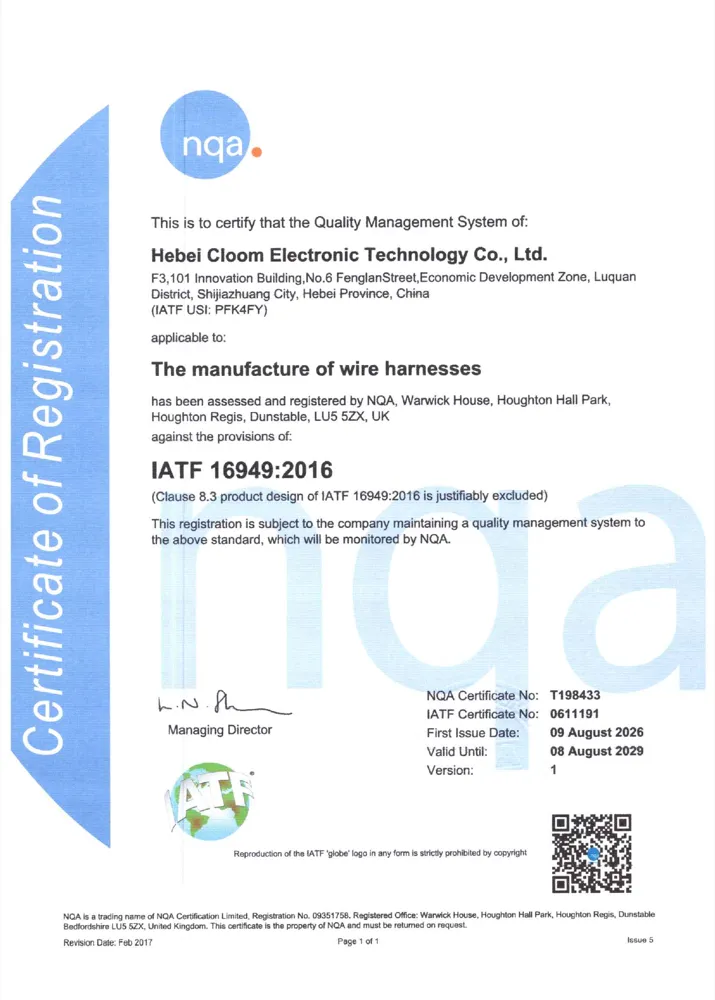
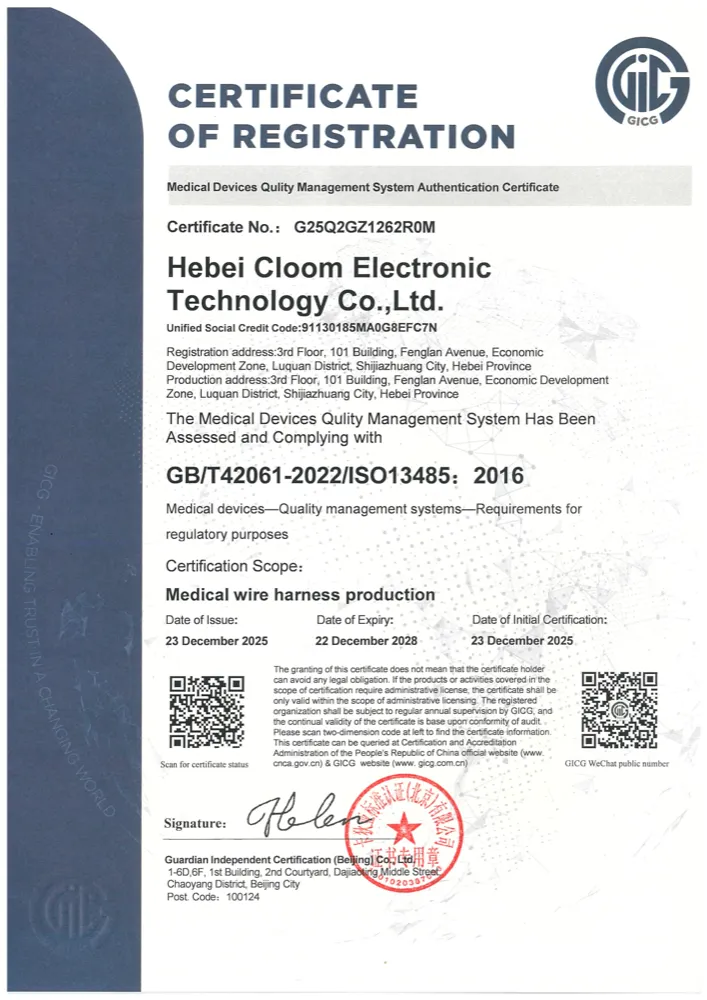
Certificates are issued to the operating manufacturing entity named on each document. Click any certificate to open the full-size scan.
Have a BOM, assembly drawings, enclosure CAD, harness requirements or test procedure? Send what you have. We’ll confirm the Box Build scope, identify missing information and outline the next step before quotation.

Send your drawing or idea and we’ll reply with a practical Box Build scope review.