Controlled High-Mix Production
Low-Volume and High-Mix Box Build Assembly
Manage changing configurations with released inputs, visible material status and unit-level handover records.
- Variant-controlled builds
- Repeatable instructions
- Documented configuration
Request a quote
Request a Box Build Scope Review
Send your drawing, BOM or idea — we reply with a practical Box Build scope review.
Projects That Fit Low-Volume, High-Mix Production
This model can suit complete units with multiple SKUs, options or regional configurations, complex manual integration, changing forecasts or production that must preserve close revision control. Fit is assessed from product maturity, material status, assembly content, verification and the cost of managing each change, not from a published quantity rule.
Projects That May Need a Different Model
A build may need more engineering work before repeat production if core drawings remain unresolved, material identity is unclear, test acceptance is undefined or changes are entering without control. Very high-volume products designed around dedicated automation also require a different production and investment review. We identify these conditions during scope review rather than forcing every project into the same model.
Variant and Configuration Control
A configuration matrix ties each SKU or option to its BOM, hardware revision, firmware, labels, accessories, packaging and test differences. The traveler or unit record shows which released configuration was applied. This structure helps prevent a correct part or file from being used on the wrong variant.
Kitting and Material Status
We coordinate material from approved sources and customer-supplied inputs against the released build. Shortages, substitutions, partial kits and revision mismatches are visible before assembly. Alternatives require approval and an effective point; similar parts are not exchanged informally.
Clear status before release
Identity, quantity, revision, acceptance state and supply responsibility are checked for the applicable build configuration.
Repeatable Assembly and Inspection
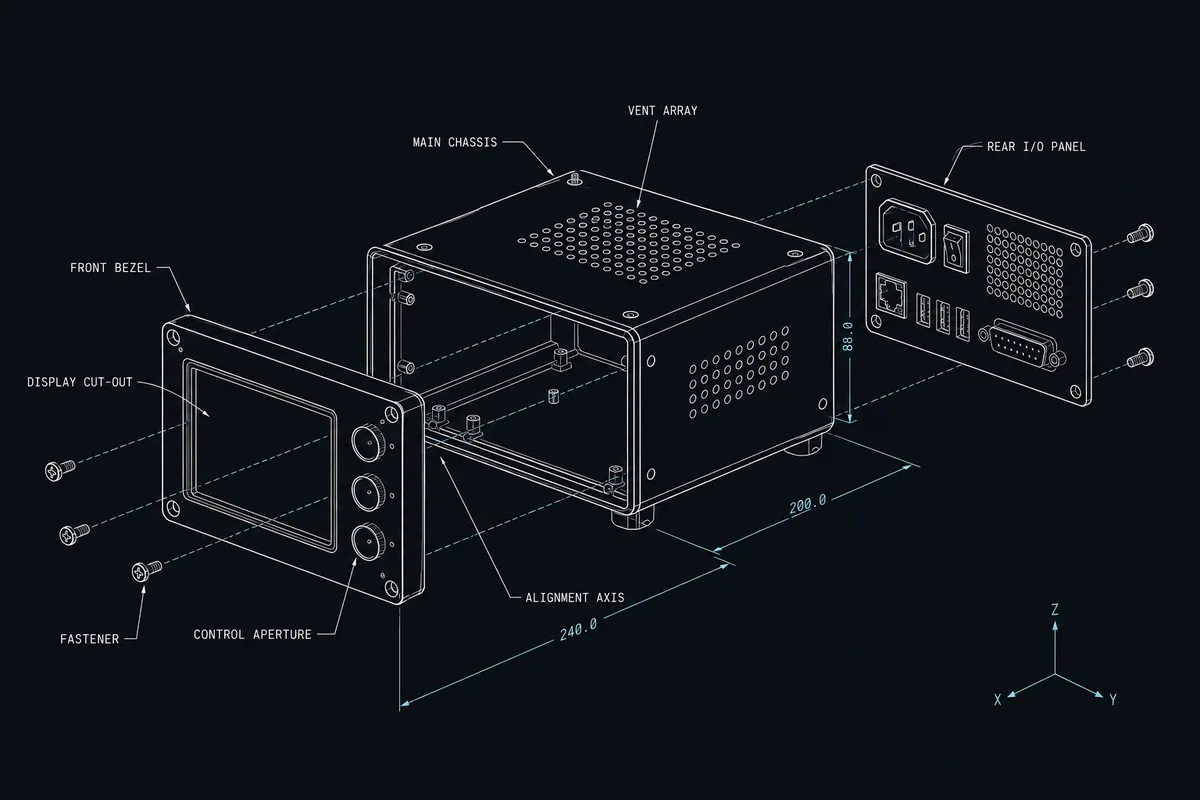
Version-controlled work instructions capture assembly order, fastening, board mounting, harness route, inspection points and reference images where useful. A first-unit review checks the current configuration before the remaining build proceeds. Engineering changes update the instruction, test and affected records together.
For a new or materially changed product, start with NPI and pilot production.
Test, Serialization and Handover
Each unit or batch can carry the agreed configuration, functional test, label, serial and packaging status. The required depth and data format are defined for the project. Failures, authorized rework and retest remain connected to the release decision.
Volume, Forecast and RFQ Inputs
Send planned batch sizes, annual forecast, product mix, variants, revision status, expected fluctuation and target timing together with the complete product files. Quantity and production fit are evaluated with assembly content, material exposure and testing requirements for the specific project.
Prepare the technical package
Include BOM, drawings, enclosure, PCBA and harness inputs, firmware, test, labels, packaging and supply responsibility.
Review the capability map
Check which integration, configuration, verification and final-delivery activities belong in scope.
Ready to Review Your Box Build Scope?
Have a BOM, assembly drawings, enclosure CAD, harness requirements or test procedure? Send what you have. We’ll confirm the Box Build scope, identify missing information and outline the next step before quotation.